How Spectator Annotations During Broadcast Events Refine Strategy Manuals for Anonymous Browser Arena Matchups
Freya Jenkins · Sep 15, 2026
How Spectator Annotations During Broadcast Events Refine Strategy Manuals for Anonymous Browser Arena Matchups
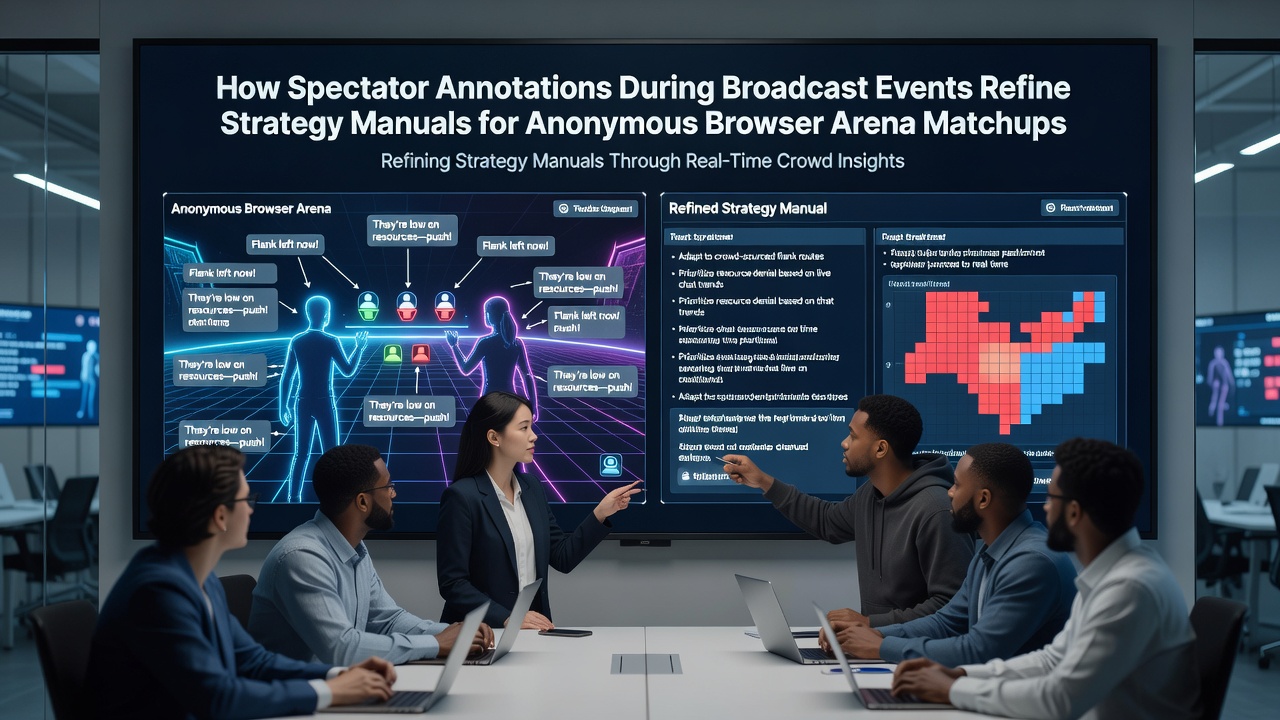
Data from browser-based arena platforms shows that spectator annotations collected during broadcast events contribute directly to updates in strategy manuals used for anonymous multiplayer matchups, and this process involves real-time tagging of player actions combined with post-event analysis that feeds into centralized databases maintained by community organizers. Researchers at institutions across North America have documented how these annotations capture details such as positioning patterns and resource allocation choices that remain invisible in raw match logs alone.
Annotation Collection Mechanisms in Live Broadcasts
Broadcast platforms integrate annotation tools that allow viewers to mark specific moments in anonymous browser arena sessions, and these tools timestamp comments on elements like movement sequences or defensive setups while preserving player anonymity through randomized identifiers. Studies conducted by European gaming research groups indicate that such annotations accumulate at rates exceeding several thousand entries per major event, with patterns emerging when multiple spectators highlight the same tactical sequences across different matches. In September 2026 several platforms reported integration of automated clustering algorithms that group related annotations into thematic categories for manual refinement.
Those who manage strategy documentation often cross-reference these viewer contributions against archived replay data, and this cross-referencing reveals correlations between annotated timing cues and successful outcomes in subsequent pairings. Observers note that the process operates without direct player identification, relying instead on aggregated behavioral clusters that maintain the anonymous nature of the arenas.
Refinement Processes for Strategy Documentation
Strategy manual updates occur when annotation datasets reach volume thresholds established by documentation teams, and these teams incorporate findings into sections covering adaptive responses to common arena scenarios. Evidence from industry reports compiled by organizations in the Asia-Pacific region demonstrates that manuals revised through this method show measurable alignment with observed win rates in follow-up anonymous matchups. The refinement cycle typically spans several weeks after each broadcast event, during which editors merge overlapping annotations into concise tactical entries while discarding outliers that lack corroboration from multiple sources.
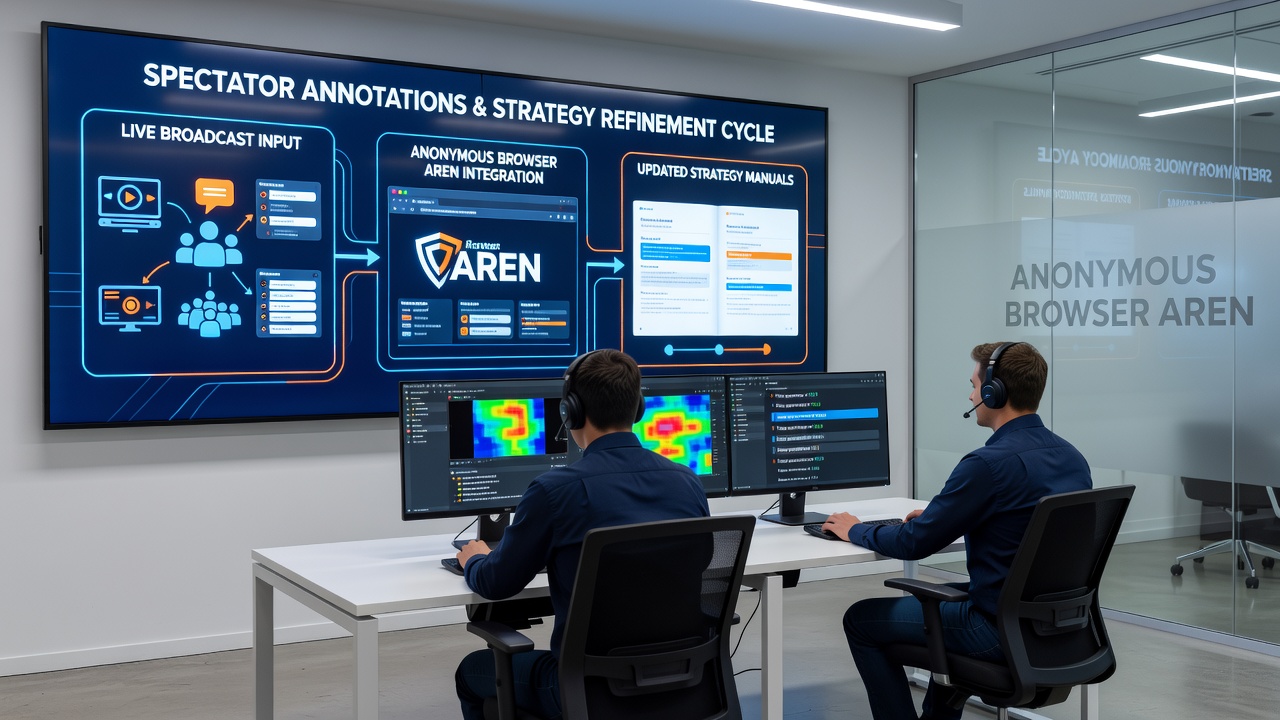
One documented workflow involves mapping viewer notes onto decision trees that represent branching possibilities within anonymous matches, and this mapping allows manual authors to expand coverage of edge cases identified through broadcast observations. Data compiled through these workflows reveals shifts in recommended approaches that reflect evolving player adaptations captured in real time by spectators.
Integration with Anonymous Matchup Systems
Anonymous browser arena systems draw upon updated strategy manuals when generating pairing recommendations, and these recommendations incorporate refined parameters derived from annotation-driven revisions. Research published through Canadian academic channels has tracked how such integrations influence matchup diversity by adjusting difficulty calibrations based on aggregated spectator insights. The linkage between annotations and manual content remains indirect, operating through intermediary databases that filter and categorize contributions before they influence algorithmic outputs.
Platform operators in various regions have implemented verification steps that require annotations to meet consistency standards across multiple events before inclusion in strategy resources, and these steps help sustain the reliability of the resulting documentation. Figures from tournament archives show increased manual consultation rates following major broadcast periods where annotation activity peaked.
Case Examples from Recent Events
During a series of September 2026 broadcasts focused on anonymous arena formats, spectators annotated numerous instances of flanking maneuvers that deviated from prior manual guidance, and documentation teams subsequently added dedicated subsections addressing these variations. Similar patterns appeared in European-hosted events where viewer contributions highlighted synchronization techniques among temporary alliances, leading to expanded entries on coordination signals within text-only environments.
Additional examples include annotations that identified resource denial tactics effective in prolonged anonymous sessions, prompting manual creators to revise sections on early-game priorities. These updates drew from datasets exceeding prior collection volumes, according to summaries released by participating platform administrators.
Conclusion
The refinement of strategy manuals through spectator annotations during broadcast events establishes a feedback loop that connects live observations with documented guidance for anonymous browser arena matchups. Continued collection and processing of these annotations supports ongoing alignment between manual content and observed gameplay dynamics across different regions and platforms.